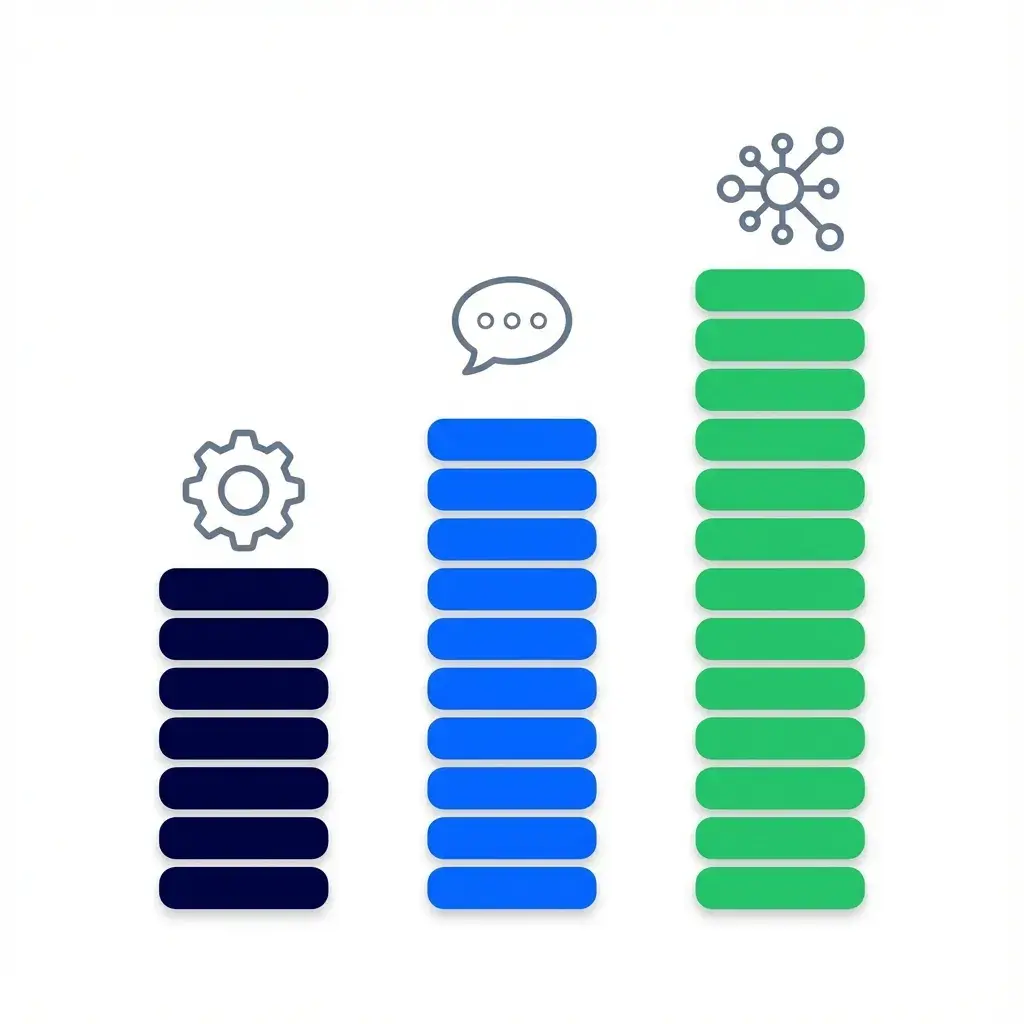
You've heard it everywhere: "AI is transforming business." Your competitors are talking about it. Your team is asking about it. Tech headlines won't stop mentioning it.
But here's the truth most won't tell you: most business owners don't actually know where to start with AI — and that's completely okay.
If you're feeling overwhelmed by the AI hype, wondering whether it's relevant to your business or unsure how to move from curiosity to action, this guide is for you. By the end, you'll understand what AI actually means for your business in 2026, how to identify opportunities and what your first step should be.
What AI Actually Means for Your Business
Forget robots taking over the world. For your business, AI is simply software that learns from data to make decisions, predictions or automate tasks that previously required human judgment.
In practical terms, AI helps you automate repetitive work so your team focuses on strategy, understand patterns in data you couldn't spot manually, personalize customer experiences at scale, respond to inquiries 24/7 without hiring night shifts, and predict outcomes before they happen (demand, churn, maintenance needs).
Think of AI as a highly efficient assistant that never sleeps, doesn't make emotional decisions and gets better over time.
The 3 Types of AI Your Business Might Actually Use
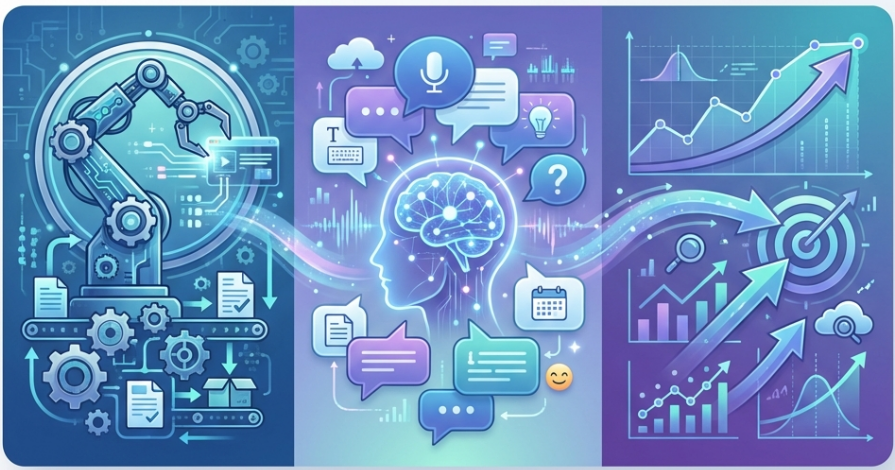
There are three main categories of AI solutions relevant to businesses in 2026.
Type 1: Process Automation AI handles routine, rule-based tasks automatically. Real example: automatically categorizing customer support tickets, routing them to the right team and drafting initial responses. Best for businesses drowning in repetitive administrative work.
Type 2: Intelligent Chatbots & Virtual Assistants communicate with customers or employees using natural language. Real example: a chatbot that helps customers check order status, process returns or book appointments without human intervention. Best for companies with high customer inquiry volumes or after-hours support needs.
Type 3: Predictive & Analytical AI finds patterns in your data to forecast trends or optimize decisions. Real example: predicting which leads are most likely to convert or which equipment needs maintenance before it breaks. Best for businesses with significant data who need to work smarter, not just faster.
Key takeaway: Most businesses start with Type 1 or Type 2 because they deliver quick wins. Type 3 typically comes later as you scale.
How to Know If Your Business Is Ready for AI
You don't need to be a tech giant to benefit from AI. But you do need a few fundamentals in place.
You're ready if: you have repetitive processes that eat up hours each week, you're collecting data but not using it effectively, your team is stretched thin and you need to scale without proportional headcount growth, customer expectations are rising (faster responses, 24/7 availability), and you're open to change and willing to invest 3–6 months.
You're not ready if: you have zero digital infrastructure, you're looking for a "magic bullet" to fix fundamental business problems, or your budget and timeline expectations are unrealistic.
The bottom line: If you have clear, repetitive processes and some digital infrastructure, you're probably ready to explore AI.
The 4 Questions Every Business Owner Should Ask
Before you invest a dollar in AI, answer these four questions.
1. What problem am I actually trying to solve? Don't start with "I want AI." Start with "I need to reduce support response time" or "I need to improve lead qualification."
2. What would success look like, specifically? Vague goals like "be more efficient" won't work. Define measurable outcomes: "Reduce support ticket response time from 4 hours to 30 minutes."
3. Do I have the data this AI solution needs? AI learns from data. If you want to predict customer churn, you need historical customer data. Key question: do you have 6+ months of relevant data in a somewhat organized format?
4. What happens if I do nothing? AI isn't mandatory for every business. But consider: are competitors gaining an edge? Is your team burning out on repetitive work? If the cost of inaction is higher than the investment, it's time to move.
Real-World Example: From Chaos to Clarity
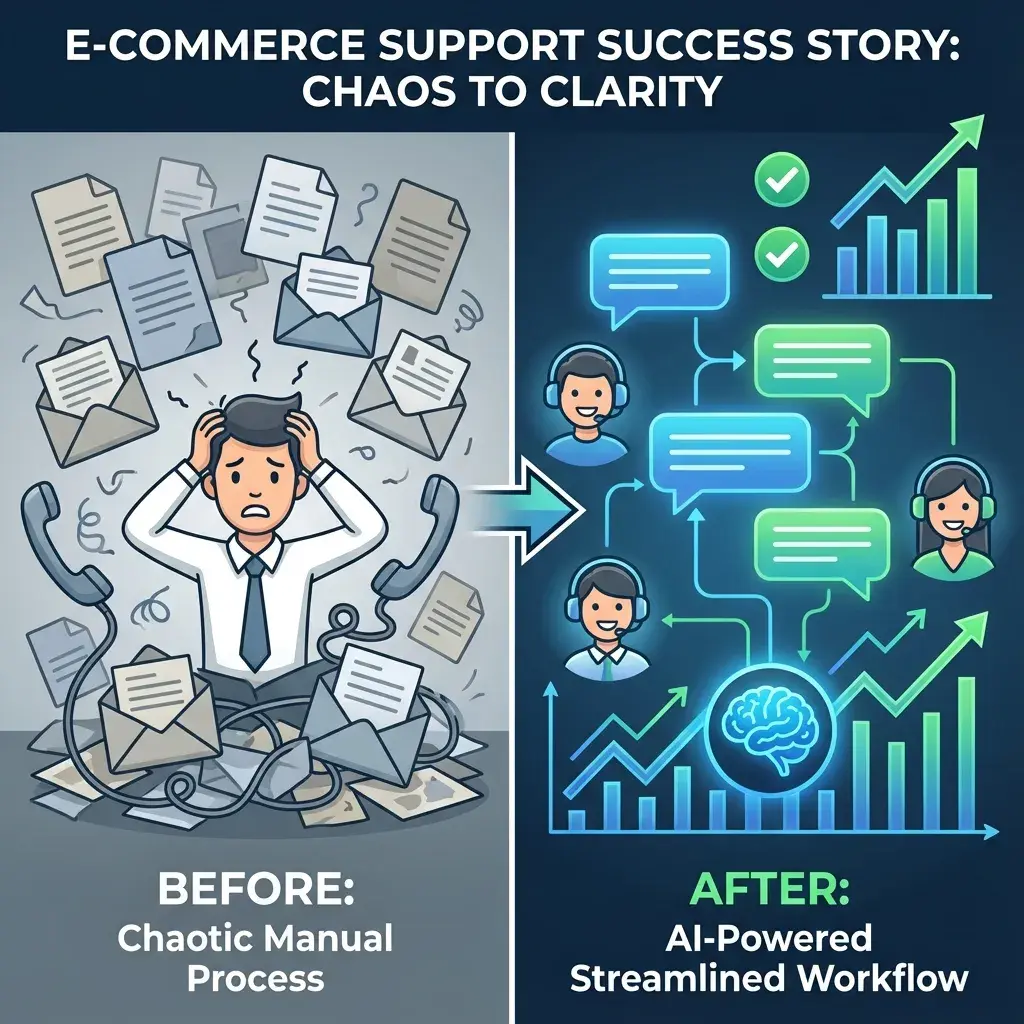
A mid-sized e-commerce company was drowning in customer support requests. Their 5-person team was working overtime, response times hit 12+ hours and customer satisfaction scores were dropping.
We implemented an intelligent chatbot that handled 70% of routine inquiries and escalated complex issues to human agents.
Results after 90 days: average response time dropped from 12 hours to 8 minutes, the support team refocused on complex issues, customer satisfaction scores increased by 34%, and operational costs for support decreased by 60%.
The lesson: They didn't try to automate everything. They identified one high-impact problem and solved it well. That single project built the confidence and ROI to justify everything that followed.
Your AI Roadmap for 2026: The First 90 Days
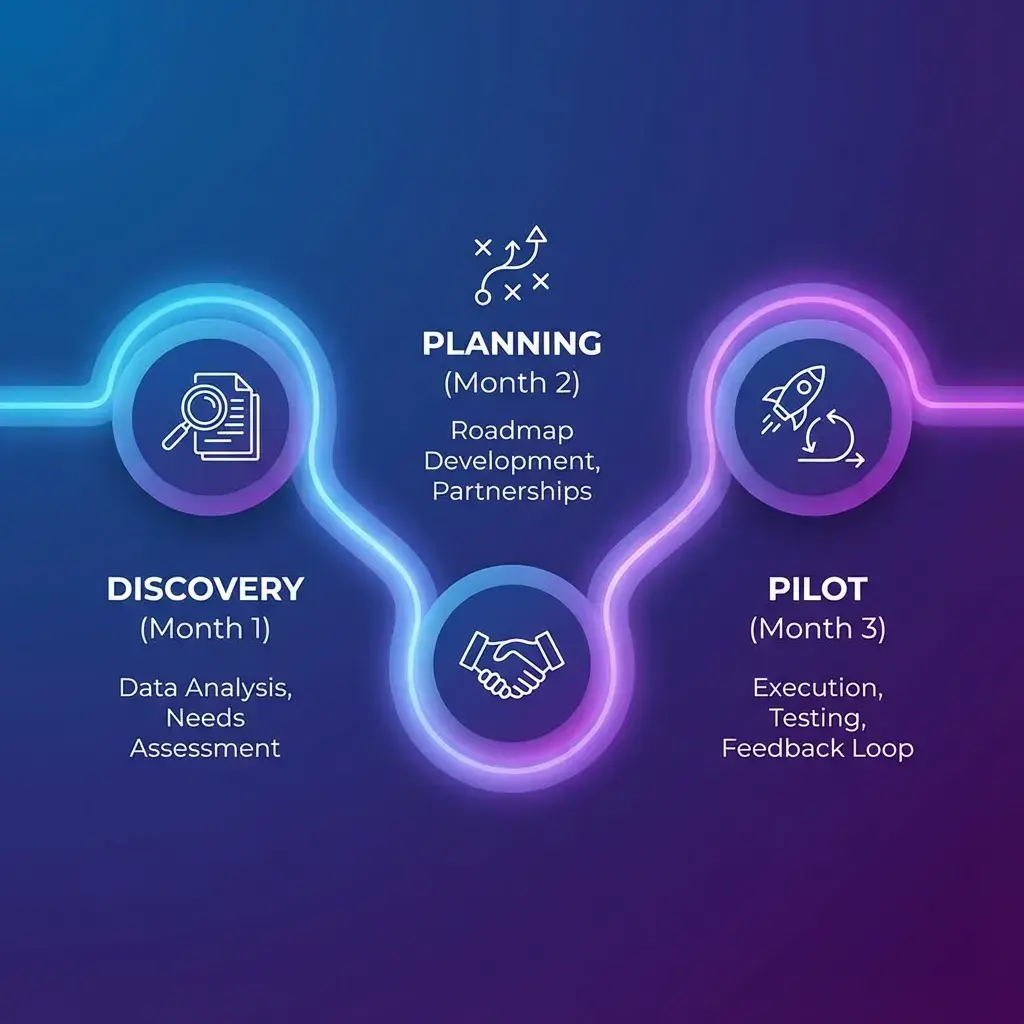
Days 1–30: Discovery & Definition. Map your top 5 most time-consuming processes. Identify the quick win — which process would save the most time or money? Set success metrics: define what "success" looks like in numbers.
Days 31–60: Partner Selection & Planning. Research solutions and partners, looking for experience in your industry. Request proposals — be specific about your problem. Align on timeline: realistic AI projects take 8–16 weeks to build.
Days 61–90: Pilot & Iterate. Start with a pilot — test with a small subset of use cases. Measure early — track your success metrics from day one. Refine before scaling: fix issues in the pilot before rolling out broadly.
Common Myths That Hold Businesses Back

Myth #1: "AI is only for big tech companies." Reality: small and mid-size businesses often see bigger impact from AI because they have more manual processes to optimize.
Myth #2: "I need a data science team to use AI." Reality: modern AI solutions are built to integrate with your existing systems. You need a good implementation partner, not a PhD.
Myth #3: "AI will replace my employees." Reality: AI handles repetitive tasks so your team can focus on creative, strategic work. Companies using AI typically grow their teams.
What to Do Next: Your First Step
You don't need to have all the answers today. But you do need to take the first step.
Spend 30 minutes this week mapping out your 3 biggest operational bottlenecks. Write down the process, how many hours it consumes per week, and what "solved" would look like. That exercise alone often reveals your first AI project immediately.
Ready to move from curiosity to action?
Let's discuss your specific situation — where AI makes sense for your business, what it would cost, and what realistic results look like. Free consultation, no commitment, we respond within 24 hours.
Irfan Malik is the CEO and Founder of ibute, with 20 years of experience helping businesses leverage custom software and AI solutions to scale efficiently. He specializes in making complex technology accessible and actionable for business leaders.
Frequently Asked Questions
How much does AI implementation typically cost for a small business?
Do I need technical expertise to implement AI in my business?
How long does it take to see results from AI?
What if AI doesn't work for my specific industry?
Need a clear path forward?
Get a custom AI roadmap — tailored to your stack, timeline and budget.
Talk to an Expert →