Every week we talk to companies that know they need to implement AI but are completely stuck on one question: where do we start?
They see competitors launching AI initiatives. They read case studies about 40% efficiency gains and 10x productivity improvements. They have a dozen ideas for where AI could help. But when it comes time to actually pull the trigger and invest in an AI project, they freeze.
The problem isn't a lack of ideas. The problem is too many ideas and no systematic way to figure out which one will actually deliver ROI.
This is where most AI initiatives fail before they even begin. Companies either pick a use case that sounds impressive but doesn't solve a real business problem, or they pick something so ambitious it takes 18 months to show results (and by then the stakeholders have lost patience).
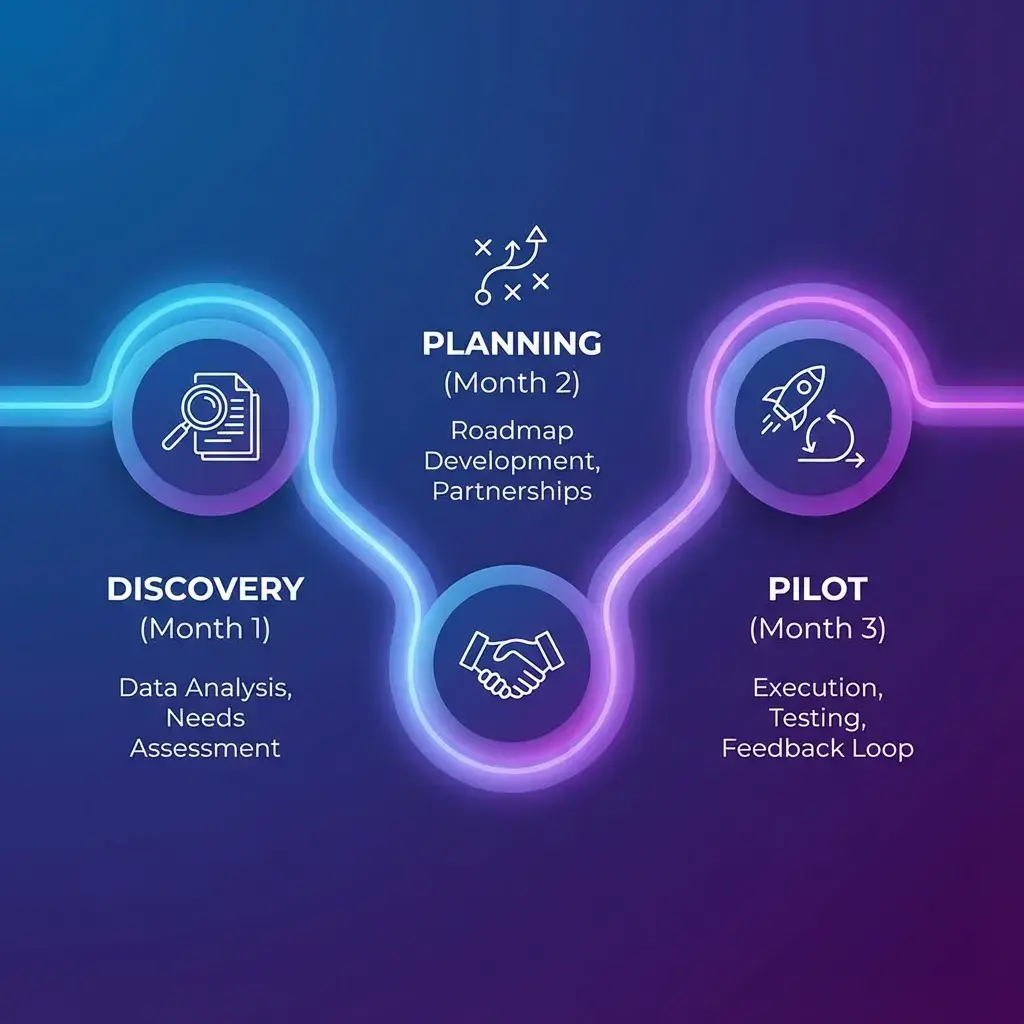
After implementing AI solutions across fintech, healthcare, logistics and SaaS companies, we've developed a framework that cuts through the noise. This three-step process helps you identify the AI use case that will deliver measurable impact in 90 days while building momentum for your broader AI strategy.
Why Most Companies Pick the Wrong AI Use Case
Before we get into the framework, let's talk about the four mistakes we see companies make when selecting their first AI project.
Mistake #1: Starting with the Coolest Technology. Someone reads about GPT-4 or sees a demo of autonomous agents and decides "we need that." The problem? Cool technology without a clear business problem is just an expensive science experiment. You end up with a solution looking for a problem.
Mistake #2: Tackling the Biggest Problem First. It's tempting to throw AI at your most painful business challenge. But often the biggest problems are also the most complex, involve the most stakeholders and require the most change management. Your first AI project should build confidence, not become a 12-month death march.
Mistake #3: Following What Competitors Are Doing. Just because your competitor launched an AI chatbot doesn't mean you need one. Their operations, data and constraints are different from yours. What delivers ROI for them might burn budget for you.
Mistake #4: Picking What's Easiest to Implement. Some teams pick AI projects based purely on technical feasibility. "We have the data for this" becomes the deciding factor. But easy to build doesn't mean valuable to the business. You might successfully implement AI that nobody uses.
The right approach evaluates potential use cases across three dimensions: business impact, technical feasibility and organizational readiness. That's exactly what this framework does.
The 3-Step Framework: Impact, Feasibility, Readiness
This framework takes 2-3 weeks to complete properly. It requires honest assessment and cross-functional input. But it prevents the expensive mistake of building the wrong thing or building the right thing in the wrong way.
Step 1: Map Your Impact Opportunities (Week 1)
The first step is identifying where AI could genuinely move the needle for your business. Not where it would be interesting or innovative, but where it would be measurably valuable.
Start with your three most expensive problems. Gather your leadership team and answer these questions honestly:
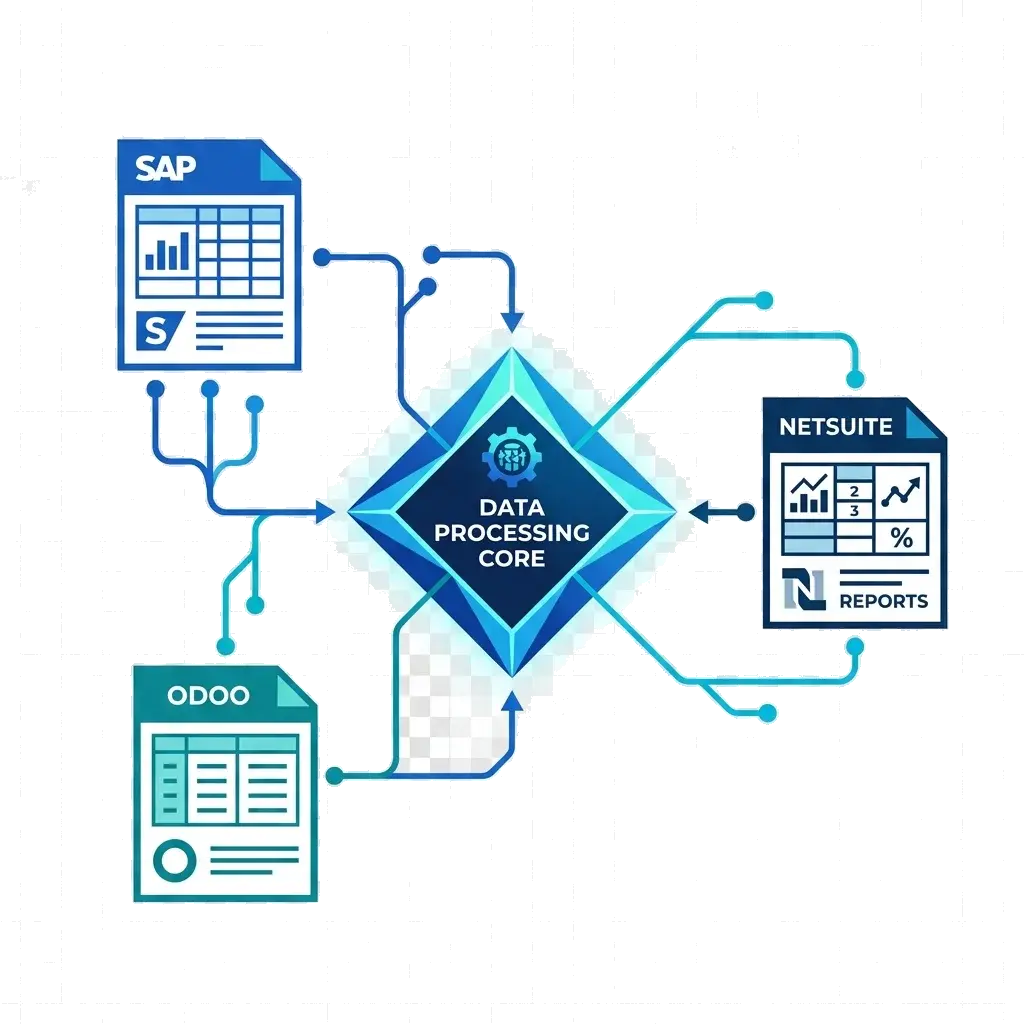
What manual process is consuming the most hours per week? Think customer support responding to repetitive questions, sales team researching prospects before outreach, operations reconciling data across systems, finance processing invoices or engineering triaging bug reports.
Where are you losing revenue due to inefficiency? Slow response times causing churn, missed sales from poor lead qualification, inventory issues, billing errors or delayed insights preventing timely decisions.
What scalability bottleneck will hit you first as you grow? A support team that can't handle 2x ticket volume, a sales team needing 10 new hires for next year's targets or an onboarding process already stretched thin.
Write down your top 3 answers in each category. You now have 9 potential AI opportunities.
Apply the "manual, repetitive, high-volume" filter
AI delivers the clearest ROI when it automates work that is currently manual, follows consistent patterns and happens at high volume. Score each of your 9 opportunities on three criteria:
- Manual intensity: How many person-hours per week does this consume? (1–10 scale)
- Pattern consistency: How similar are the inputs and required outputs? (1–10 scale)
- Volume: How many times per week does this task happen? (1–10 scale)

Multiply these scores to get an "AI opportunity score" for each use case. Your top 3–5 scoring items become your candidate use cases for deeper evaluation.
Example from a SaaS company we worked with: They scored 9 opportunities and found customer support automation dominated: 8 × 9 × 10 = 720 (high manual effort, very consistent patterns, 800+ tickets per week). Sales email personalization scored 210. Churn prediction scored 72. Customer support became the clear priority, not because it was the most technically interesting, but because the business impact was undeniable.
Step 2: Evaluate Technical Feasibility (Week 2)
Now that you've identified high-impact opportunities, you need to assess whether you can actually build them. This is where many companies get stuck because they don't have deep AI expertise in-house.
The good news is you don't need a PhD in machine learning to evaluate feasibility. You need to answer four practical questions about each candidate use case:
Question 1: Do you have the data? AI needs fuel. Ask yourself: do you have historical examples of this task being done? Do you have documentation or knowledge bases? Is the data accessible and reasonably clean, or will you spend 6 months organizing it? If you can't collect sufficient data within 4–6 weeks, this use case drops in priority.
Question 2: Is the success criteria clear and measurable? You need to know what "working" looks like: "Resolves 60% of Tier 1 tickets without human escalation." "Increases response rate from 8% to 12%." "Extracts key fields with 95% accuracy." Vague goals like "improve efficiency" are project killers.
Question 3: What's the acceptable error rate? AI is probabilistic, not deterministic. High tolerance: content generation humans review before publishing. Medium tolerance: support ticket routing that can be overridden. Low tolerance: financial calculations. Zero tolerance: safety-critical systems (not a good first project). Look for use cases where 80–85% accuracy delivers significant value.
Question 4: How quickly can you get user feedback? AI improves with feedback loops. Ideal first projects have daily or weekly feedback opportunities, clear right/wrong signals from users and short iteration cycles.
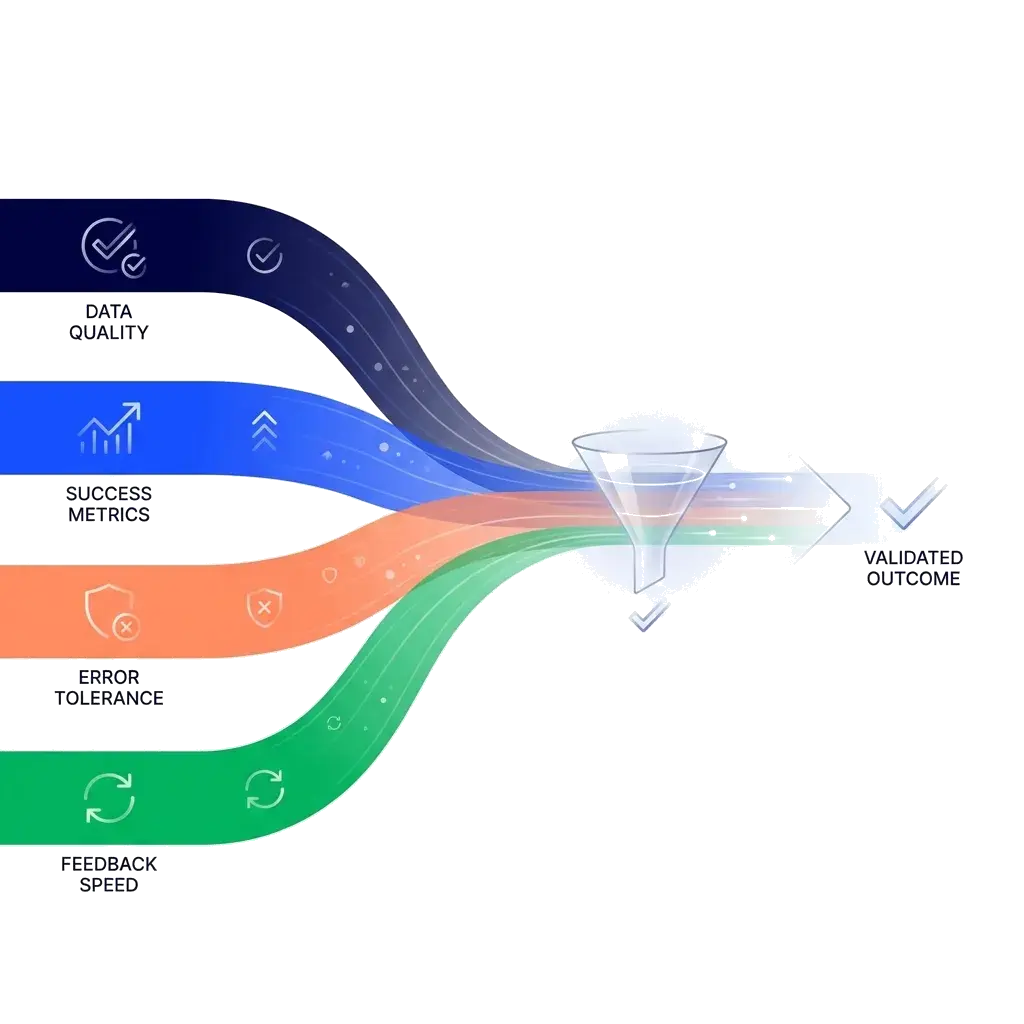
Create a feasibility score: For each use case score these four factors (Data, Success Clarity, Error Tolerance, Feedback Speed) on a 1–10 scale. Use cases scoring 32+ are strong candidates.
Step 3: Assess Organizational Readiness (Week 3)
This is the step most companies skip, and it's why so many technically successful AI projects fail to deliver business value. You can build amazing AI, but if the organization isn't ready to adopt it, you've wasted your investment.
Stakeholder Alignment. Map out who needs to support this project: Champions who will actively promote adoption. Daily users who will interact with the AI. Skeptics who may resist. Decision makers who control budget. Strong first projects have clear champions, motivated users and executive support.
Change Management Complexity. Low complexity: AI assists humans who keep their existing workflow (support agents get suggested responses they can edit). Medium complexity: AI changes some workflows but humans stay in control. High complexity: AI replaces existing processes. Your first project should be low to medium complexity.
Integration Requirements. Look for use cases that integrate with 1–3 systems you already have good API access to. Projects requiring 5+ integrations or touching highly regulated data will have longer timelines and more stakeholders to manage.
The Decision Matrix: Bringing It All Together
Now you have three scores for each candidate use case: Impact Score, Feasibility Score and Readiness Score.
Plot your use cases on a matrix. Your highest-impact AI opportunity is the one that scores high across all three dimensions.
The optimal first project sits at the intersection of high impact, feasibility and readiness.
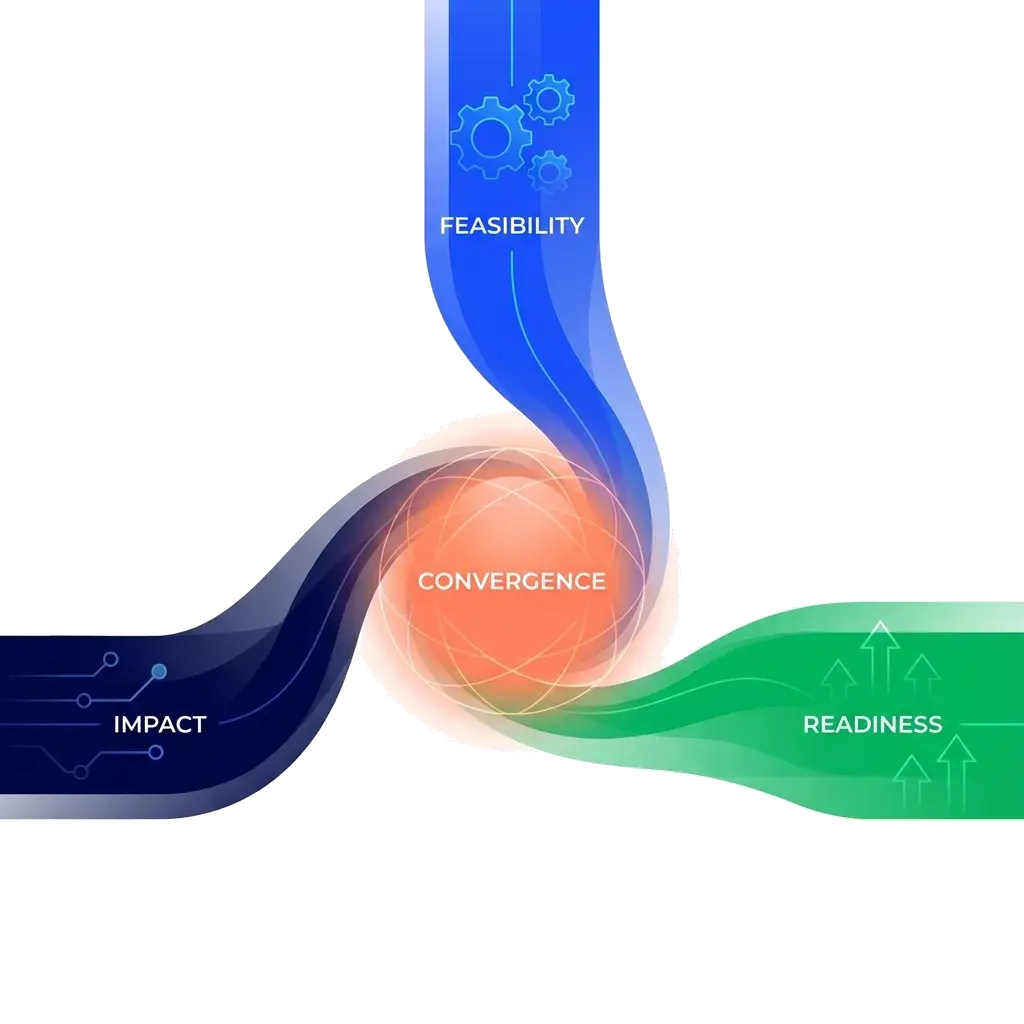
What if nothing scores high in all three areas? This is actually common and valuable information. High impact but low feasibility: invest in data infrastructure first. High impact but low readiness: do stakeholder alignment work before launching. High feasibility and readiness but low impact: build something else. "Easy" doesn't mean "valuable."
Real Implementation: How a Healthcare Company Used This Framework
A digital health platform came to us with eight different AI ideas on the table and an executive team that couldn't agree on priorities. The VP of Engineering wanted predictive patient risk scoring. The VP of Customer Success wanted an AI-powered support chatbot. The Chief Medical Officer wanted clinical documentation assistance.
After running the 3-week framework, the scores told a clear story. Support automation scored highest across all three dimensions (Impact 900, Feasibility 36/40, Readiness 28/30). Clinical documentation was promising long-term but had low readiness (14/30 due to physician adoption barriers). Patient risk scoring had unknown feasibility and unclear data quality.
The decision: Despite clinical documentation being potentially more transformative long-term, support automation was the clear first project. They implemented it in 8 weeks. Within 90 days it was handling 65% of Tier 1 support tickets without human intervention.
Six months later, with proven success and organizational confidence in AI, they launched the clinical documentation project. But they wouldn't have gotten there if they had started with the harder problem first.
Your Next Step: Map Your AI Opportunities Together
This framework works, but it requires honest assessment and cross-functional collaboration. The companies that get the most value invest 2–3 weeks gathering data, scoring use cases and building stakeholder alignment. Not rushing through it in a single meeting.
Ready to map your AI opportunities?
Let's apply this framework to your specific business. Schedule a free consultation and we'll help you identify your highest-impact AI use case. No commitment. We respond within 24 hours.
The first AI project you choose sets the tone for everything that follows. Get it right and you build momentum, organizational confidence and a foundation for increasingly ambitious AI initiatives. Get it wrong and you've spent budget and political capital on something that doesn't deliver, making the next AI conversation harder to have.
Choose wisely. Use the framework.
Irfan Malik is the CEO and Founder of ibute, with 20 years of experience helping businesses leverage custom software and AI solutions to scale efficiently. He specializes in making complex technology accessible and actionable for business leaders.
Frequently Asked Questions
How long does the AI opportunity mapping process take?
What if no use case scores high in all three areas?
Should we start with the biggest business problem?
Do we need an internal data science team to use this framework?
Need a clear path forward?
Get a custom AI roadmap, tailored to your stack, timeline and budget.
Talk to an Expert →