Here is a common scenario in B2B enterprises: the executive leadership team purchases hundreds of Claude Team or ChatGPT Enterprise seats, conducts a brief 1-hour demo, and expects productivity to soar.
According to a Gallup Q1 2026 workforce study of over 23,000 U.S. employees, while 50% of workers use AI at least occasionally, only 13% are daily users, and only 28% use it frequently (daily or weekly). More tellingly, only 12% of employees strongly agree that the technology has transformed how their work gets done. The employees who do use the tools are mostly using them to draft polite emails, summarize standard transcripts, or write simple formulas. The promised "AI transformation" never materializes.
This is the Corporate AI Adoption Paradox. Buying licenses is a software transaction; enabling a workforce is a cultural and operational transition. True corporate AI enablement focuses on teaching employees to re-engineer their workflows and build custom integrations, rather than simply typing conversational queries into a generic prompt box.
To close this gap, organizations must build custom, department-specific training programs that account for human psychology, data security, and clear business metrics.
Managing the Human Side of AI Adoption (Change Management)
Before discussing technology, you must address the primary bottleneck of AI adoption: organizational friction and employee resistance to AI tools.
When AI is introduced from the top down, employees frequently experience a range of unexpressed concerns:
- The Replacement Fear: "If I automate this workflow, am I training my replacement?"
- The Exposure Fear: "Will AI expose that my day-to-day work is mostly administrative?"
- The Manager Trap: Middle managers, focused on meeting short-term deliverables, often discourage experimentation because they cannot afford the initial learning curve dip.
To overcome these barriers, leadership must establish psychological safety. Enablement must be framed as a capacity multiplier. The message should be clear: AI is not being introduced to reduce headcount, but to redirect your hours from manual admin to high-value output.
This gap points directly to the middle management layer. Gallup's research highlights a "Manager Multiplier" effect: employees whose managers actively support their AI adoption are 9.3 times as likely to report that AI has transformed their work. Yet, only 21% of workers strongly agree that their manager supports their team's use of AI.
To resolve this, middle managers should be evaluated on team capacity gains rather than pure task completion. When managers are trained and incentivized to help their teams automate, they transition from operational bottlenecks into active champions of change.
Why One-Size-Fits-All AI Training Fails
A generic course on "How to use ChatGPT" fails B2B enterprises because it ignores departmental reality. A software engineer, a copywriter, and an HR compliance officer use AI in entirely different ways.
For training to be effective, it must be structured around departmental blueprints that address the specific tools, compliance bounds, and workflows of each team.
Departmental AI Enablement Blueprints
1. Leadership & Strategic Alignment
- Focus: Identifying B2B compliance risks, allocating budgets, and setting corporate acceptable-use policies.
- Core Skills: Distinguishing between custom builds and off-the-shelf software, mapping ROI, and evaluating data privacy.
- Strategic Step: Before rolling out tools, leaders must review assessing if your business is ready for AI to determine where the organization stands.
2. Marketing & Sales (Demand Generation & Personalization)
- Focus: Building structured prompt libraries, generating target B2B buyer profiles, conducting deep account research, and customizing outreach draft cycles.
- Core Skills: Writing multi-step prompting instructions that enforce tone, format, and accuracy.
Illustrative B2B Sales Prompt Example:
"You are a B2B account researcher. Given the following company profile [insert profile details], identify their top 3 operational pain points likely addressed by [insert product category]. Do not hallucinate or guess — if the provided profile does not contain enough data, state clearly which pieces of information are missing."
3. Operations & Human Resources (Workflows & Administration)
- Focus: Document parsing, customer ticket routing analysis, onboarding guide structuring, and automated meeting summarization.
- Core Skills: Training employees to feed unstructured data (like raw feedback surveys) into models to categorize operational friction points.
4. Product & Engineering (Building & Operating AI)
- Focus: Safely utilizing AI coding assistants (e.g. Copilot, Cursor), integrating LLM APIs into existing software, prompt engineering at the API layer, and establishing evaluation metrics (evals).
- Core Skills: Transitioning from basic prompts to robust retrieval-augmented generation (RAG) structures, and coordinating with MLOps pipelines to prevent model drift.
Industry-Specific Constraints & Compliance
Whether you are a health system in Austin, a fintech SaaS in London, or a global logistics operator in Lahore, B2B enterprises cannot treat AI adoption as a lawless playground. Regulatory constraints dictate how AI must be adopted across different sectors:
- Healthcare (HIPAA & PHI): Direct public LLM usage is a compliance violation if protected health info (PHI) is entered. Teams must be trained on routing medical data through secure channels with Business Associate Agreements (BAAs) in place.
- Finance & Banking (SEC / FINRA): Financial institutions must maintain strict records preservation and data lineage. Inputs and outputs of AI systems supporting financial advice or operations must be logged and audit-ready.
- Legal & Professional Services: Under standard consumer terms of service, AI providers reserve the right to review inputs. Querying client files in public LLMs can waive attorney-client privilege. Legal training must focus on zero-retention developer APIs.
- European Operations (GDPR & The EU AI Act): Organizations operating in Europe must align their staff training with the EU AI Act's risk classification framework and ensure user data input complies with GDPR’s strict "right to be forgotten" principles.
The Data Compliance Decision Tree
Employees must have a simple, repeatable framework to decide which data can be sent to which AI tools:
- Is the data public or anonymous?
- YES: Public LLM Tools (e.g. ChatGPT, Claude free versions) are okay to use.
- NO (Contains IP, PHI, or PII):
- Does it contain highly regulated data or sensitive IP?
- YES: Requires Self-Hosted / VPC Models (e.g. Llama, Mistral) where data never leaves your infrastructure.
- NO: Requires Enterprise Workspace Tiers (e.g. ChatGPT Enterprise, Claude Team) with verified zero-data-retention APIs.
- Does it contain highly regulated data or sensitive IP?
- Public/Anonymous Data: (e.g., public blog drafts, general industry reports) — Safe for standard public web interfaces.
- Customer/Proprietary Data: (e.g., customer support emails, product documentation) — Requires enterprise tiers or zero-data-retention APIs where inputs are never used to train external models.
- Highly Regulated / IP-Heavy Data: (e.g., proprietary algorithms, HIPAA records) — Requires self-hosted open-weight models (like Llama or Mistral) deployed inside the company's private cloud (VPC). Learn more about setting up a secure AI implementation.
The ROI Measurement Framework
Organizations should not measure training success by "number of logins" or "hours spent in workshops." Enablement success must be tied directly to operational efficiency:
| Department | Leading Indicator | Lagging Metric (ROI) | Time to Measure |
|---|---|---|---|
| Marketing | First-draft generation speed | Total custom assets generated / agency costs | 30 Days |
| Sales | RFP response turnaround time | Active outbound pipeline per sales rep | 14 Days |
| Operations / HR | Time spent organizing meeting minutes | Total hours spent on internal ticketing admin | 30 Days |
| Engineering | Code generation & unit test speed | Time to resolve open PRs / bug backlogs | 60 Days |
Signs Your AI Training Program is Failing
Many organizations spend tens of thousands of dollars on training only to fall into predictable traps. Watch out for these failure indicators:
- The "Video Course" Trap: Buying generic, pre-recorded online courses. Employees play them on mute in the background to get a completion certificate. There is no behavioral change.
- Measuring Seats Instead of Workflows: Celebrating a "95% seat activation rate" while employees only use the tool as a thesaurus or simple copywriter.
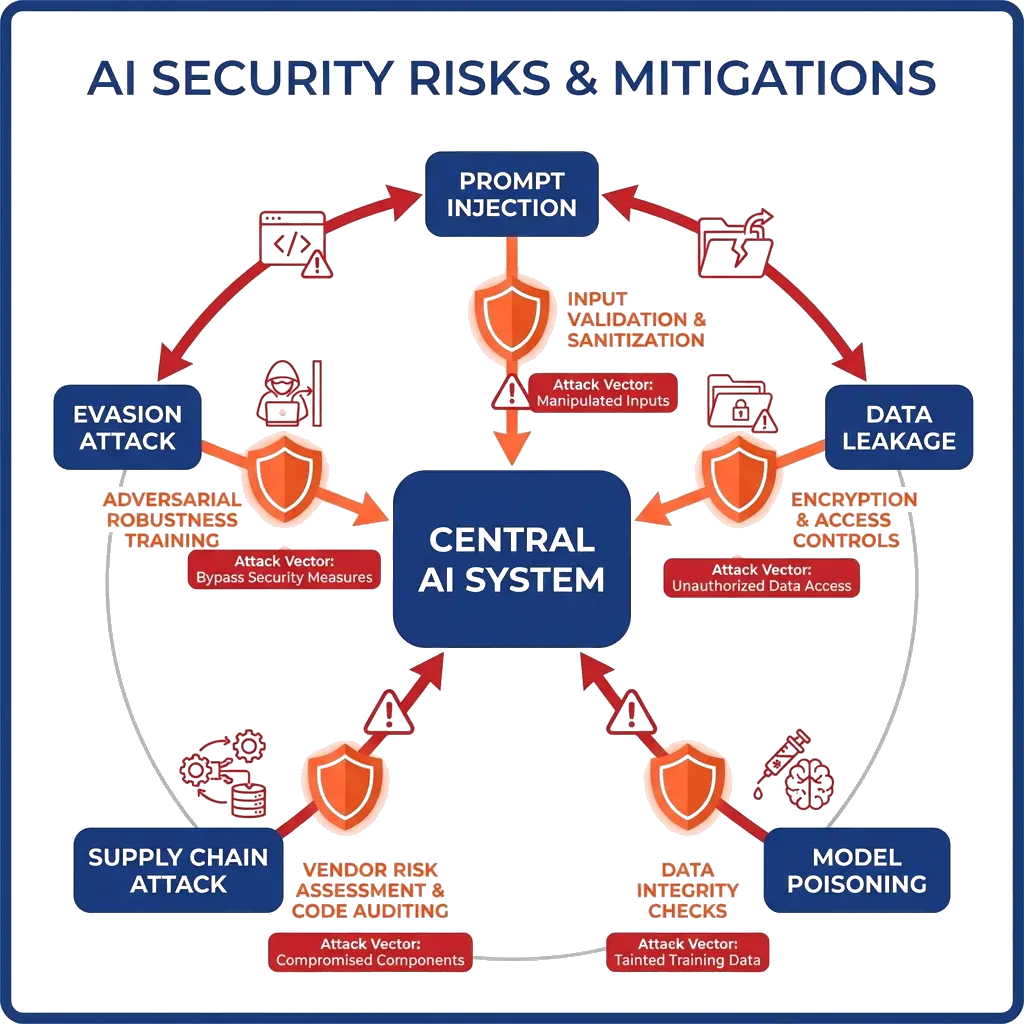
- Ignoring Data Governance: Letting employees use personal browser accounts on company-owned laptops, which leaks proprietary code or customer datasets.
- Zero Prompt Library Infrastructure: Failing to build a centralized, shared repository of verified prompts. Every employee reinvents the wheel daily.
The 6-Week AI Enablement Pilot Timeline
To avoid these traps, organizations should run a structured pilot program with clear deliverables before attempting a company-wide rollout.
- Week 1: Workflow & Tool Audit
- Deliverable: Identify manual bottlenecks and current user behavior in the target department. Determine if the team has completed the groundwork outlined in our guide on how to identify your highest-impact AI use case.
- Week 2: Security & Acceptable-Use Policy
- Deliverable: Establish clear data boundaries and draft a departmental AI compliance guide.
- Week 3: Tool Selection & VPC Sandboxing
- Deliverable: Secure API keys, enterprise licenses, and set up safe testing sandboxes.
- Week 4: Department-Specific Workshops
- Deliverable: Conduct hands-on workshops. Build a shared prompt library for the department's top 3 workflows.
- Week 5: Directed Trial Weeks
- Deliverable: Teams run their day-to-day workflows inside sandboxes with daily engineering check-ins to debug issues.
- Goal: Refine prompt instructions and troubleshoot API constraints.
- Week 6: Evaluation & ROI Verification
- Deliverable: Review leading indicators and calculate time saved. Plan scale-up paths to adjacent departments.
Conclusion: Setting Your Enablement Strategy
Buying AI software is simple. Helping your staff adapt their workflows, protect company IP, and build custom automation is where the hard work lies. If your team is struggling to see beyond basic chat prompts, it is time to move past generic training and establish a structured enablement pilot.
Ready to design your B2B enablement roadmap? ibute helps companies assess their workflows, build custom AI integrations, and train teams on secure deployment. Book a free 30-minute consultation with our strategy team to discuss how we can help your organization leverage AI effectively.
Irfan Malik is the CEO and Founder of ibute, with 20 years of experience helping businesses leverage custom software and AI solutions to scale efficiently. He specializes in making complex technology accessible and actionable for business leaders.
Frequently Asked Questions
What is corporate AI enablement vs. generic AI training?
How do we protect sensitive company data during AI training?
Which departments see the fastest ROI from AI training?
How long is a typical corporate AI enablement workshop?
Need a clear path forward?
Get a custom AI roadmap — tailored to your stack, timeline and budget.
Talk to an Expert →