Direct Definition: A forward deployed AI engineer (FDE) is a senior production engineer who works embedded inside a client's codebase, data pipelines, and team workflows—rather than delivering from an arm's length. While traditional consultants deliver advisory slide decks and staff contractors execute isolated tickets, forward deployed engineers own the end-to-end integration, automated eval harnesses, and live production deployment of enterprise AI systems.
In 2026, foundation models have commoditized the easy half of artificial intelligence. Getting a compelling proof-of-concept running on Claude Opus 5, GPT-5.6 Sol, or Gemini 3.7 Flash takes an afternoon. You upload a sample PDF, tweak a system prompt in a web playground, and watch the model summarize contracts or generate SQL with uncanny fluency.
Then you attempt to connect that prototype to your company's live infrastructure.
Suddenly, the demo collides with reality: a fifteen-year-old on-premise ERP with undocumented XML endpoints, role-based access permissions that live across three disjointed Active Directories, dirty customer data, strict SOC 2 and HIPAA audit boundaries, and non-negotiable 800ms latency budgets.
The demo breaks. The project stalls. And the executive team begins asking why a six-figure investment produced zero measurable impact on the P&L.
This is the central paradox of enterprise AI today: prototypes are frictionless, but production deployments are notoriously difficult.
To bridge this chasm, business leaders are re-evaluating the traditional advisory playbook. The era of paying management consultancies hundreds of thousands of dollars for 60-page PDF strategy reports is ending. In its place, technical leaders are turning to forward deployed AI engineers—specialized practitioners who embed directly inside internal codebases to build the unglamorous integration layer and ship working software.
Here is the comprehensive breakdown of how the forward deployed engineering model compares to traditional consulting and staff augmentation, why AI pilots fail, and how to choose the right delivery model for your organization.
The 2026 Prototype Trap: What the Data Shows
The struggle to move generative AI from sandbox experiments into production is not an isolated organizational issue—it is an industry-wide crisis backed by empirical research:
- The Abandonment Crisis: Research from Gartner's updated analysis (Why Half of GenAI Projects Fail: Avoid These 5 Common Mistakes, 2026) revealed that at least 50% of generative AI projects are abandoned after the proof-of-concept stage due to poor data integration, inadequate risk controls, escalating compute costs, and unclear business value.
- The High Failure Baseline: A landmark study by the RAND Corporation (Research Report RR-A2680-1, The Root Causes of Failure for Artificial Intelligence Projects and How They Can Succeed, authored by James Ryseff, Brandon F. De Bruhl, and Sydne J. Newberry) documented that industry estimates place AI project failure rates at over 80%—more than double the baseline failure rate for traditional non-AI enterprise software.
- The P&L Return Deficit: Benchmark research from MIT Project NANDA (The GenAI Divide: State of AI in Business 2025, July 2025) analyzing over 300 enterprise deployments discovered that ~95% of enterprise GenAI pilots failed to generate measurable P&L return, isolating the primary root cause as the "last-mile integration gap"—the failure to connect models into live transactional workflows, permissions, and CI/CD eval harnesses.
- The Infrastructure Wall: S&P Global Market Intelligence (Voice of the Enterprise: AI & Machine Learning, Infrastructure 2025) reported that 42% of enterprise AI adopters abandoned the majority of their AI initiatives in 2025, with 46% of proofs of concept (POCs) scrapped prior to production deployment due to infrastructure integration debt and latency bottlenecks.
| The Easy Half (Commoditized) | The Hard Half (Engineering Reality) |
|---|---|
| Prompt engineering & standard LLM APIs | Legacy ERP & CRM middleware (undocumented APIs, schema drift) |
| Web playground & sandbox demos | Row-level RBAC data permissions (Active Directory, Okta, ACLs) |
| Generic document summarization | Deterministic CI/CD eval suites (hallucination & precision scoring) |
| Synthetic sample test data | Latency budgets, rate limits & semantic caching (<800ms) |
| Isolated feature branches | SOC 2 & HIPAA private VPC boundaries (zero data retention) |
| Static proof-of-concept report | Production runbooks & internal developer handover |
Why do traditional consultancies struggle so acutely with this reality? Because their entire operating model is built on advice delivered at an arm's length.
Why Traditional AI Consulting Fails at Deep Engineering
Traditional management and IT consultancies were architected for a world of enterprise resource planning rollouts and quarterly governance cycles. They excel at market landscaping, vendor scoring matrices, and executive slide presentations.
When applied to generative AI and agentic systems, however, that model breaks down across four structural fault lines:
1. Slide Decks Cannot Debug Undocumented APIs
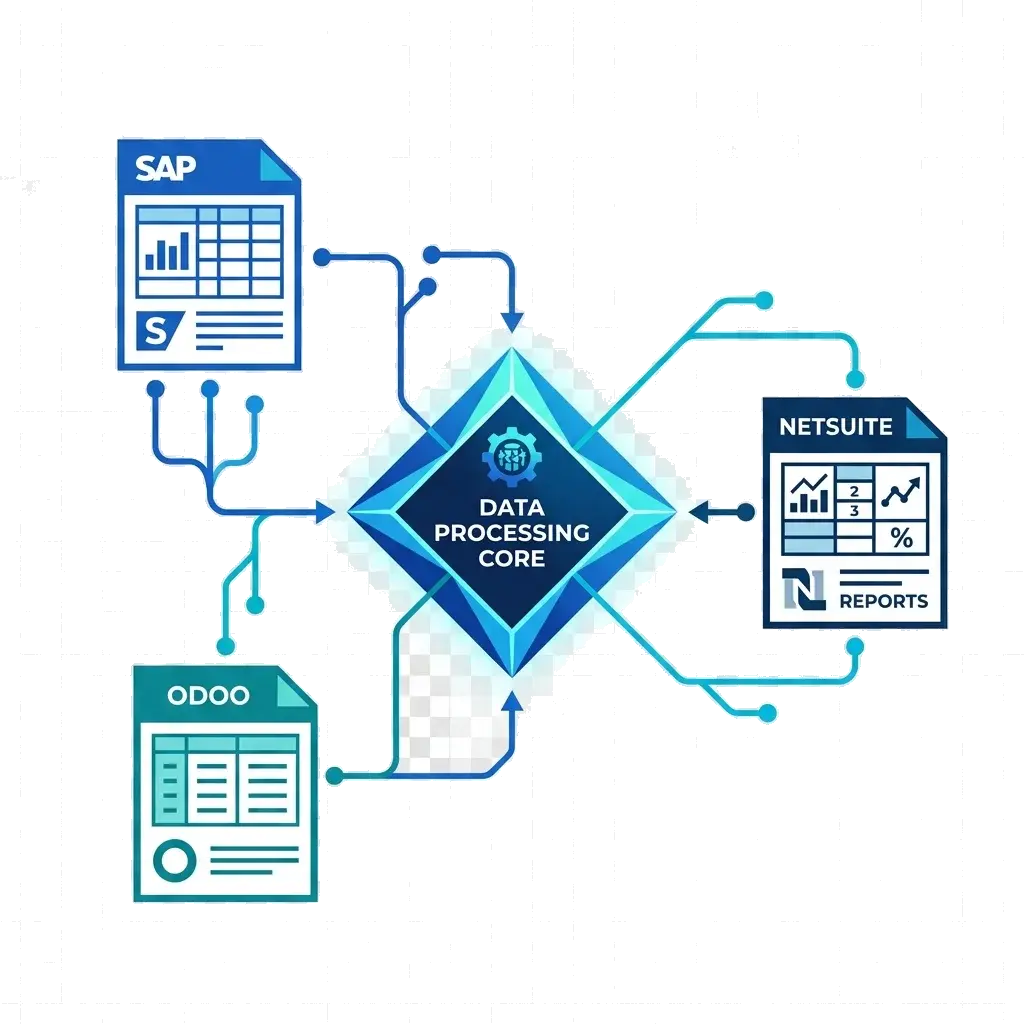
When an AI agent needs to read real-time inventory from SAP, verify shipping status in NetSuite, and update a ticket in Zendesk, the bottleneck is never conceptual. The bottleneck is debugging an undocumented XML-RPC endpoint, handling token expiration edge cases, or resolving schema drift in a database created in 2011. A strategy consultant sitting in a conference room cannot resolve a legacy database timeout with a PowerPoint recommendation.
2. Recommendations Do Not Write CI/CD Eval Harnesses
In traditional software, tests are deterministic: assert response.status_code == 200. In LLM applications, testing is probabilistic: a prompt that works for 90% of customer inquiries might hallucinate wildly on the remaining 10%.
Making an AI system production-ready requires building an eval harness as code—an automated testing pipeline running in CI that grades retrieval quality, hallucination rates, context relevance, and latency across hundreds of real customer edge cases before every deployment. Consultancies deliver opinions about quality; they do not write unit test suites in your repository.
3. The "Advice at Arm's Length" Disconnect
Traditional consultants operate outside your firewall. They request sanitized data exports, conduct weekly stakeholder interviews, and present findings in bi-weekly steering committee meetings. But modern AI engineering requires immediate access to live runtime feedback: reviewing real error logs, profiling token bottlenecks, and pair-programming with internal engineers who understand the business logic.
4. The Structural Incentive for Dependency
Management consultancies make money on retainer duration and team scale. There is no financial incentive for a large consultancy to embed, ship a working system in 60 days, train your internal developers, and leave. Their business model thrives on perpetual advisory drift and recurring statement-of-work extensions.
The 3 Delivery Models Compared
When technical leaders look for external support to build AI systems, they typically encounter three distinct delivery mechanisms: Forward Deployed AI Engineers, Traditional Management Consulting, and Staff Augmentation / Offshore Body Shops.
Understanding the fundamental trade-offs between these models is critical to avoiding wasted budget and stalled roadmaps:
| Dimension | Forward Deployed AI Engineers (FDE) | Traditional Consulting | Staff Augmentation |
|---|---|---|---|
| What Arrives | Senior engineers inside your repos, Slack, and CI/CD pipelines | Partner & analysts delivering a strategy slide deck | Contractors picking up isolated backlog tickets |
| Engagement Scope | Fixed-Outcome Sprint (30/60/120d) | Deliverable document or monthly retainer | Headcount and hourly billing |
| Integration Ownership | Full End-to-End Ownership | None (handed back to internal developers) | Limited strictly to assigned ticket specs |
| Real Data Access | Embedded in client dev environment from Week 1 | Rarely (relies on sanitized static samples) | Variable (often lacks broader system context) |
| Success Metric | Live software moving a specific P&L metric in production | Formal acceptance of final PDF report | Hours billed or story points completed |
| Exit & Handover | Paired internal engineers, CI eval suites, and full runbooks | Follow-on proposal for next phase | Contract expiry or open-ended extension |
| Primary Failure Mode | Scope creep past named outcome (kept in check by fixed windows) | Strategy deck sits on shelf; nothing ships | Builds code without business domain context |
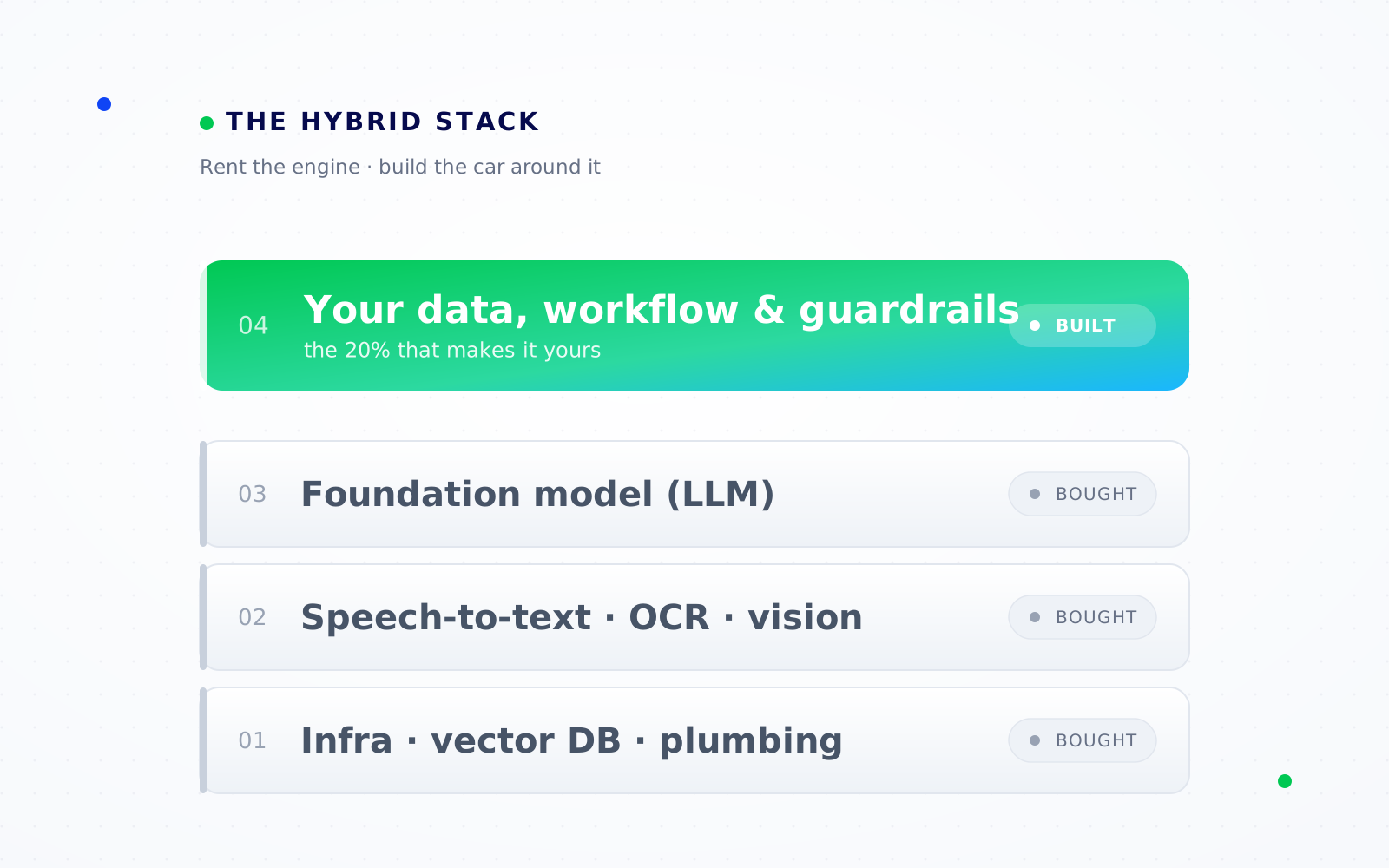
The Core Difference: Staff augmentation gives you hands without an architectural brain. Traditional consulting gives you a brain without hands. Forward deployed AI engineering gives you senior architectural ownership executing hands-on inside your codebase.
What a Forward Deployed AI Engineer Actually Does in Your Repo
The term "Forward Deployed Engineer" originated at Palantir, where engineers were placed directly alongside government and enterprise operators to solve hard data problems in high-stakes environments. In modern AI development, the FDE role has evolved into the elite standard for applied LLM, RAG, and agent integration.
When a forward deployed AI team lands inside your organization, here is the technical work that actually occurs:
1. Production Data Plumbing & Permissions-Aware RAG
Most enterprise AI demos fail because they use naive vector search over clean flat files. An FDE builds production-grade retrieval infrastructure:
- Row-Level & Role-Based Security (RBAC): Ensuring that an AI system answering employee queries strictly respects access control lists (ACLs) from Active Directory, Okta, or ERP roles so junior staff never retrieve executive compensation data.
- Hybrid Retrieval Architecture: Combining dense vector embeddings with sparse keyword search (BM25) and reciprocal rank fusion (RRF) to eliminate hallucinated retrieval.
- Ingestion & Freshness Pipelines: Automating chunking, metadata enrichment, and incremental syncs over Postgres, Snowflake, MongoDB, or legacy data warehouses.
2. Evals as Code in CI/CD (Eliminating Meeting Opinions)
A pilot becomes a production system only when quality is measured deterministically. Forward deployed engineers build an automated evaluation suite running in your CI/CD pipeline (using frameworks like DeepEval or custom eval harnesses):
- Context Precision & Recall: Quantifying whether retrieval pulled the exact data necessary to answer the prompt.
- Faithfulness & Hallucination Scoring: Measuring whether every assertion in the LLM's response is mathematically supported by retrieved context.
- Regression Testing: Ensuring that optimizing a prompt for one edge case does not degrade accuracy across the remaining 95% of workflows.
3. Guardrails, Governance & Latency Optimization
Moving to production requires satisfying security teams and performance budgets:
- Private VPC & Zero-Data-Retention (ZDR): Configuring direct enterprise API endpoints or hosting open-weight models (like Llama 4 or Mistral Large) inside your private cloud (AWS/GCP/Azure) so customer data never trains third-party models.
- Semantic Caching & Tiered Routing: Routing routine classification tasks to high-throughput, low-latency models (e.g., GPT-5.6 Luna or Gemini 3.7 Flash) while reserving frontier reasoning models (like Claude Opus 5 or GPT-5.6 Sol) for complex orchestrations—slashing token costs by up to 70%.
- PII Redaction & Sanitization: Automatically stripping sensitive customer identifiers before prompts hit inference endpoints.
4. Legacy System & ERP Middleware
Building custom API wrappers around legacy databases and platforms like SAP, Odoo, NetSuite, Salesforce, and proprietary internal endpoints. (For an architectural deep dive on middleware patterns, see our guide on integrating AI agents with enterprise ERPs).
Have an AI pilot stuck short of production?
We embed forward deployed AI engineers inside your repos to harden data pipelines, build eval harnesses, and ship live software in 30 to 60 days.
The 4-Stage Engagement Framework: Land, Ship, Harden, Hand Over
Forward deployed engineering works because it is structured in disciplined, outcome-scoped windows—typically 30, 60, or 120 days. Every engagement follows a four-stage deployment roadmap designed to reach production quickly while preventing open-ended consultancy drift:
| Stage 01Land (Week 1) | Stage 02Ship (Weeks 2–4) | Stage 03Harden (Weeks 5–8) | Stage 04Hand Over (Weeks 9–12) |
|---|---|---|---|
Immediate Access
| Thin-Slice Deploy
| Production Hardening
| Complete Ownership
|
Stage 01: Land (Week 1)
- Immediate Environment Access: Repositories, development VPC, staging data copies, and Slack communication channels.
- Metric Alignment: Defining the single business metric that determines success (e.g., "reduce invoice processing time by 60% with under 0.1% error rate"). If the proposed metric is flawed, we identify it before writing code.
- Architecture Mapping: Auditing data sources, authentication boundaries, and existing technical debt.
Stage 02: Ship (Weeks 2–4)
- The Thin-Slice Deployment: Rather than spending months designing an all-encompassing system, the team builds and deploys one single workflow end-to-end into production behind a feature flag.
- Surfacing Real Constraints: Deploying a narrow workflow to real users immediately exposes edge cases, legacy timeouts, and permission blockers that a theoretical 90-day planning document would have concealed.
Stage 03: Harden (Weeks 5–8)
- Automated Evals: Building regression suites from actual production failure cases.
- Security & Guardrails: Hardening PII filters, structured output schemas, rate limiters, and audit logging.
- Performance Tuning: Implementing semantic caching, prompt compression, and model routing to meet strict latency and cost budgets.
Stage 04: Hand Over (Weeks 9–12)
- Continuous Pairing: Internal engineers pair with forward deployed engineers from Week 2 onward, ensuring deep familiarity with the code.
- Comprehensive Runbooks: Documenting system architecture, failure recovery procedures, prompt versioning strategies, and on-call runbooks.
- Clean Exit: The embedded team rolls off. Your internal developers own the codebase, maintain the eval harness, and possess the institutional knowledge to build the next AI workflow independently.
The Anti-Lock-In Principle: Why Handover Is Mandatory
The biggest risk with external technical talent is the hostage dynamic: an agency builds a convoluted, proprietary black box that requires ongoing retainers simply to keep running.
True forward deployed AI engineering is rooted in the Anti-Lock-In Principle:
- Your Codebase, Your Repos: All code, eval harnesses, configurations, and documentation are committed directly to your internal GitHub/GitLab repositories from Day 1.
- Open Standards & Modular Architecture: Systems are built on standard open-source libraries and clean API contracts, not proprietary vendor wrappers that charge licensing fees.
- Eval Harness Ownership: You own the automated test suite in CI. When your team wants to swap an underlying LLM (e.g., moving from GPT-5.6 to Claude Opus 5 or a self-hosted open-weight model), they run the CI eval suite and know within minutes whether anything broke.
- Internal Developer Capability: An engagement is deemed successful only if your internal team can maintain, debug, and expand the system without our involvement.
As we often explain to clients: a delivery model that depends on the customer being unable to maintain what was built is not engineering—it is a dependency trap.
Decision Framework: When to Choose Which Delivery Model
No single delivery model fits every business scenario. To determine whether you need traditional consulting, staff augmentation, or forward deployed AI engineers, use this operational checklist:
Choose Traditional Management Consulting If:
- You need high-level market research, macroeconomic AI impact analyses, or broad boardroom strategy presentations.
- You are executing an organizational restructuring or vendor RFP selection process across hundreds of business units.
- The goal is consensus-building among non-technical executives rather than shipping software.
Choose IT Staff Augmentation If:
- You have an established, mature AI architecture already running in production.
- Your internal staff has complete architectural clarity, writes the eval suites, and simply needs extra junior/mid-level hands to clear backlog tickets.
- The work involves standard CRUD operations or straightforward frontend UI adjustments.
Choose Forward Deployed AI Engineers If:
- You have an AI prototype or pilot that proved valuable in testing but has stalled short of production.
- The AI system must integrate with complex, undocumented legacy systems, databases, or enterprise ERPs.
- You require senior architectural ownership across data pipelines, RBAC security, latency optimization, and automated CI/CD eval harnesses.
- You want a working production system delivered within a fixed 30- to 120-day timeframe, with paired enablement so your team owns the final asset.
The Bottom Line
The competitive gap in enterprise AI is no longer defined by who has access to the best foundation models—every company has access to the exact same APIs. The winners are defined by execution velocity in the integration layer.
Slide decks do not wire APIs. Advisory reports do not write CI/CD eval harnesses. And hourly ticket-clearing contractors do not own architectural outcomes.
If your organization has an AI initiative that needs to move from a promising demonstration to an enterprise-grade production asset, the fastest path is putting experienced engineers where the real problems live: inside your codebase.
Irfan Malik is the CEO and Founder of ibute, with 20 years of experience helping businesses leverage custom software and AI solutions to scale efficiently. He specializes in making complex technology accessible and actionable for business leaders.
Frequently Asked Questions
What is the difference between a forward deployed AI engineer and an AI consultant?
How is forward deployed engineering different from IT staff augmentation?
Why do so many enterprise AI pilots fail to reach production?
What happens at the end of a forward deployed AI engagement?
How long does a forward deployed AI engineering engagement take?
Need a clear path forward?
Get a custom AI roadmap — tailored to your stack, timeline and budget.
Talk to an Expert →