
AI engineers who work inside your team until it ships.
Forward deployed AI engineering: we embed engineers in your repos, your Slack and your stand-ups, working on your real data and your real legacy systems — until the thing is running in production and your team owns it.
A forward deployed AI engineer (FDE) is an engineer who works embedded inside a client's team — in their codebase, data and workflows — rather than delivering from a distance. The model exists because most AI projects stall on integration, not on the model: the work that decides success is plumbing, evals, security and edge cases, and that work can only be done from inside.
ibute is a custom software and AI development company (founded 2022, with teams in Austin, TX and Lahore, Pakistan). Roughly 60% of our work is AI-led. Forward deployed engineering is how we deliver all of it — agents, LLM integration, automation and custom models — so this isn't a separate service you buy instead of those, it's the way they get built.
At a glance
- What it is
- Engineers embedded in your team
- Best for
- AI that works in demo, not in prod
- Typical engagement
- 30 / 60 / 120 days, outcome-scoped
- Where they work
- Your repos, your Slack, your data
- Ends with
- Handover — your team owns it
- Coverage
- Austin, TX + Lahore, Pakistan
What is a forward deployed AI engineer?
The forward deployed engineering model originated in complex enterprise software integration — where success depended on solving the messy realities between the software and the client's live data environment.
A forward deployed AI engineer is a production engineer who works from inside the client's environment: their repositories, their ticketing, their data, their constraints. It is not consulting — nothing is delivered as a recommendation. It is not staff augmentation either, because the engagement is scoped to an outcome rather than to a number of hours. The distinguishing feature is proximity: the engineer sees the messy parts, and the messy parts are where AI projects actually fail.
The reason the model has become the default for serious AI work is that foundation models have commoditised the easy half of the problem. Getting a convincing demo from Claude, GPT or Gemini takes an afternoon. Getting the same behaviour to survive real customer data, a fifteen-year-old ERP, an auth model nobody documented, latency budgets, retention rules and an audit trail takes an engineer with access — and there is no way to grant that access through a statement of work and a fortnightly status call.
MIT's widely-quoted State of AI in Business study is usually cited for its headline failure rate, which is a good deal shakier than the headline suggests. The more useful finding underneath it is the diagnosis: pilots stall on a learning gap and flawed enterprise integration, not on model quality. That is a precise description of a problem you solve by putting engineers next to the system, and a poor description of one you solve with a strategy document.
- Works in your codebase, not alongside it
- Scoped to a shipped outcome, not a headcount
- Optimises for your P&L metric, not story points
- Leaves behind a team that can maintain it
The situations this model is built for.
If you recognise your own project in one of these, an embedded engineer will move it further in a month than another round of scoping will.
It works in the demo, not in production
The prototype convinced everyone. Then real data, real permissions and real latency arrived. An embedded engineer works the gap directly instead of specifying it.
The AI has to talk to a system nobody wants to touch
Old ERPs, undocumented APIs, a database with fourteen years of history. This is integration work, and it is done on-site or not at all.
You cannot ship until you can prove it behaves
Evals, guardrails, red-teaming and an audit trail — built against your actual failure cases, not a generic benchmark.
Your team knows what to build and has no room to build it
Senior AI engineers who ramp on your stack in days and add throughput without adding a management layer.
One workflow worked — now do nine more
Turning a single success into a repeatable internal pattern, with the tooling and templates to support it.
You want to own this, not rent it
An engagement designed to end: your engineers pair through the build and take the system over on handover.
The work that happens once someone is inside.
Not a menu to choose from — the engagement is scoped to your outcome, and this is the work it typically involves.
Integration into real systems
Wiring models into ERPs, CRMs, data warehouses and internal APIs — including the ones with no documentation and strong opinions.
Data and retrieval pipelines
Production RAG over your actual corpus: ingestion, chunking, permissions-aware retrieval, freshness and cost control.
Evals and measurement
A harness built from your real failure cases, so quality is a number in CI rather than an opinion in a meeting.
Guardrails and governance
Access control, PII handling, output constraints and audit trails — designed with your security and compliance people, not around them.
Workflow and agent build
Agents and automations that take real actions in your stack, with the fallbacks and human checkpoints that make that safe.
Enablement and handover
Pairing, documentation and runbooks throughout — so the capability stays after the engagement ends.
Forward deployed engineering vs. the alternatives.
Three models get sold into the same conversation. They fail in different ways, which is the useful thing to know about them.
| Forward deployed AI engineers | Management consultancy | Staff augmentation | |
|---|---|---|---|
| What arrives | Engineers, in your repos | A recommendation | Contractors, by the hour |
| Scoped to | A shipped outcome | A deliverable document | A headcount and a duration |
| Owns the integration | Yes — that is the job | No, it is handed to you | Only what is ticketed |
| Sees your real data | From week one | Rarely | Sometimes |
| Success measured by | The metric it moves | Report accepted | Hours delivered |
| Ends with | Handover to your team | A follow-on proposal | A contract expiry |
| Typical failure mode | Scope grows past the outcome | Nothing ships | Builds without context |
We list our own failure mode honestly because it is the one to watch for: embedded engineers are effective, which makes it tempting to keep widening what they are pointed at. Fixed outcome, fixed window, explicit handover date — that is what keeps the model from quietly turning into staff augmentation.
Land, ship, harden, hand over.
Scoped in 30-, 60- or 120-day windows against one named outcome. Every window ends with something in production, not a status report.
Land
Access, architecture walkthrough, and a hard look at the data. We agree the single metric the engagement is judged on before writing code — and tell you plainly if we think it is the wrong one.
Ship one thing
One workflow, end to end, into production behind a flag. Narrow on purpose: a real deployment surfaces the integration problems that a broader plan would have hidden until month three.
Harden
Evals against real failure cases, guardrails, permissions, cost and latency work, monitoring. This is the phase that separates a pilot from a system, and the phase most projects skip.
Hand over
Your engineers have been pairing since week two; now they take it. Runbooks, architecture docs, eval ownership, on-call handover. We leave. You can call us back for the next one.
The engagement is designed to end.
A model built on embedding only works if the client can take over. These are the artifacts that make handover real rather than ceremonial.
A system running in production
Deployed, monitored, serving real users or real internal workload — not a branch, not a sandbox, not a video of it working.
An eval harness you own
Your failure cases, encoded and running in CI, so the next person to change a prompt or swap a model knows immediately whether they broke something.
Guardrails and an audit trail
Access control, PII handling and output constraints, documented against whatever your compliance regime actually requires.
Runbooks and architecture docs
How it works, how it fails, what to do at 3am. Written during the build, not assembled in the last week.
Engineers who can maintain it
Your team paired through the build. The measure of success is that the second workflow does not need us.
A measurement baseline
The before-and-after on the metric we agreed in week one — so the next AI investment gets argued with evidence.
Where this service has shipped.
Two recent engagements that leaned heavily on this practice. Read the full case studies, or browse all work.

Edge AI Sensor Fusion for Fleet Safety
Deployed custom sensor-fusion models operating on constrained hardware with 88% accuracy under real-world weather conditions.
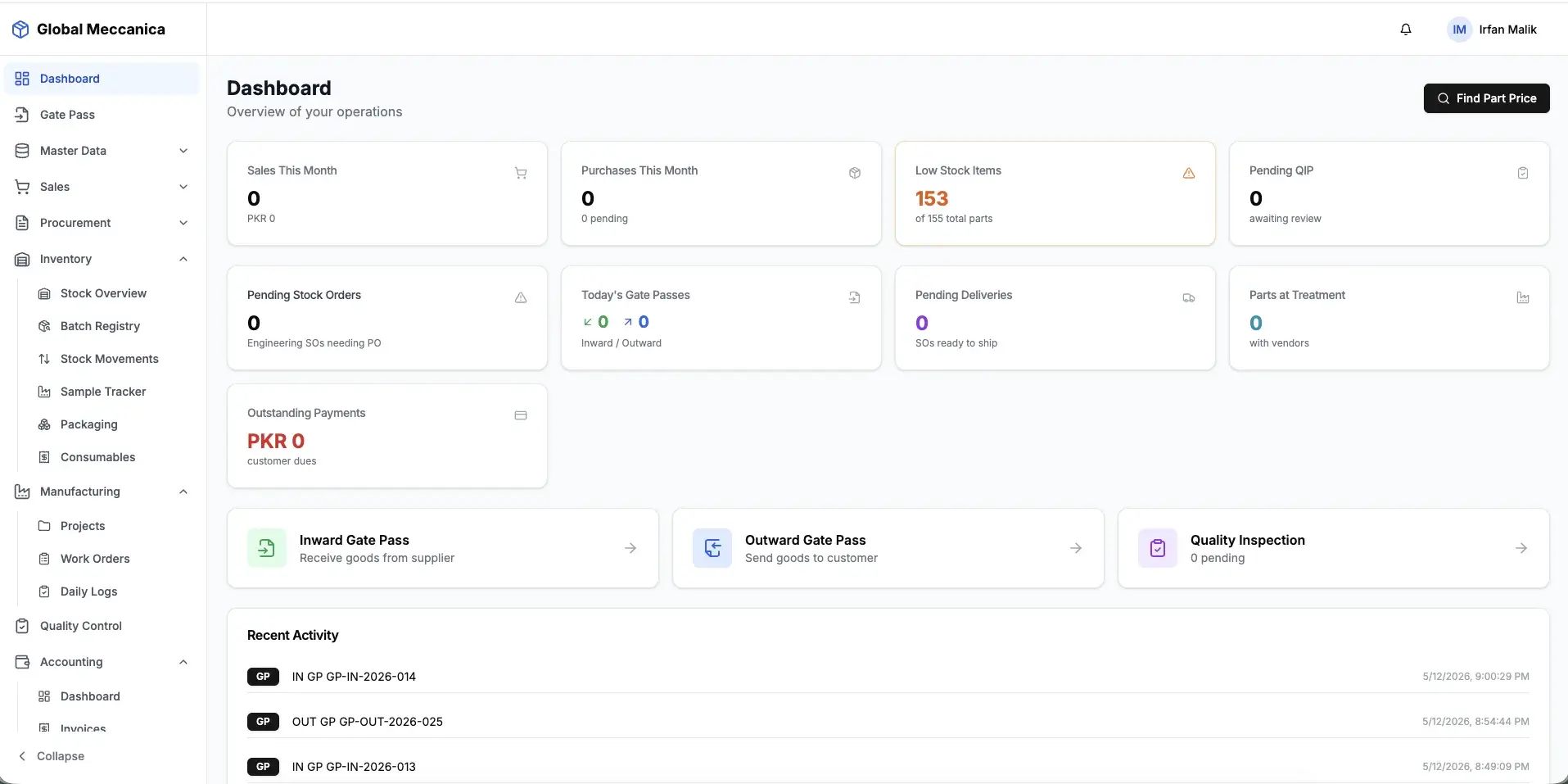
Industrial ERP Automation & AI Batch Registry
Embedded engineering team that modernized ERP inventory pipelines and automated complex manufacturing workflows.
The questions we get most.
Anything else? Email hello@ibute.tech — we reply within 24h.
What is a forward deployed AI engineer?
How is this different from hiring consultants?
Is this the same as staff augmentation?
How long does an engagement run?
How is pricing structured for forward deployed AI engineers?
How do you work with an offshore delivery team?
What access do you need?
What happens when the engagement ends?
Which AI services does this apply to?
Are you hiring forward deployed engineers?
Forward Deployed AI Engineers
How all of the below get built — engineers embedded in your team until it ships.
You are hereAI Solutions
The pillar — agents, custom ML models and automation, all in one place.
AI Agent Development
Autonomous agents that take actions inside your stack.
LLM Integration
Connect GPT, Claude or Gemini into your product, with RAG.
AI Consulting
Find where AI pays off, then de-risk the build.
AI Automation Agency
Replace manual, repetitive workflows with AI.
Get in touch
Got a pilot stuck short of production?
Free 30-minute review. We'll tell you whether this is the right fit, what the shape of the engagement would look like, and roughly what it costs. No deck. No follow-up unless you ask.
Austin · Lahore · Reply within 24 hours.